

Scan the QR Code on Your Phone To Download the App



Scan the QR Code on Your Phone To Download the App
Scan the QR Code on Your Phone To Download the App

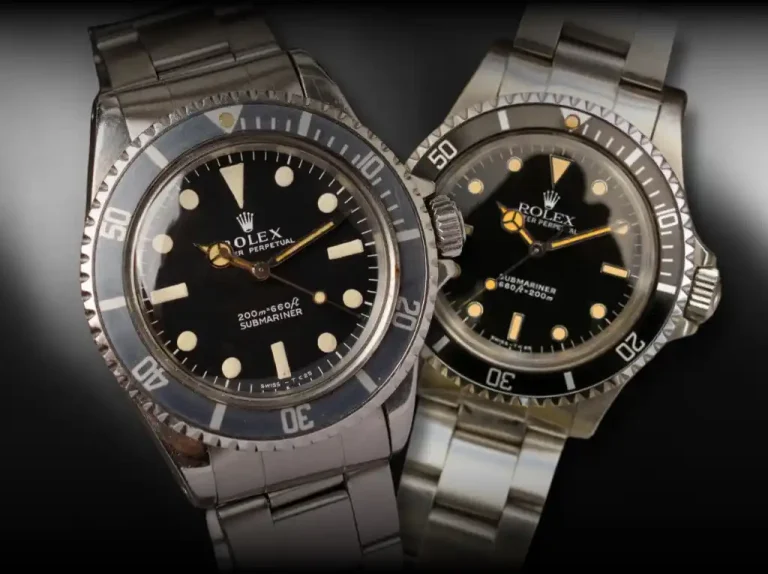
The Rolex Submariner 5513 has remained a popular choice among enthusiasts of vintage Rolex watches. Produced from around 1962 to 1989, it features a 40mm stainless steel case, a no-date dial, and a domed acrylic crystal.
Over the years, the 5513 saw changes in dial design, luminous materials, and other details. These variations distinguish different examples of the reference and contribute to its enduring appeal.
Understanding the 5513’s history and variations provides useful context for assessing its originality, condition, and market value before a purchase. This guide examines its development, key specifications, notable dial variations, and important considerations when buying one.
The Rolex Submariner 5513 combines practical diving features with the straightforward design of classic Rolex sports watches. Its key specifications include:
Throughout its nearly three-decade production run, the Submariner 5513 underwent several design changes, resulting in dial variations and other subtle differences that continue to interest vintage Rolex collectors today.
Rolex introduced the Submariner 5513 in 1962, following the reference 5512, which debuted around 1959. Both models featured a 40mm Oyster case and 200-meter water resistance. Unlike chronometer-certified versions of the 5512, the 5513 used a non-chronometer-certified movement, positioning it as a simpler alternative within the Submariner range.
The 5513 remained in production for approximately 27 years, becoming one of the longest-running references in Submariner history.
Throughout its production, Rolex refined the 5513’s appearance while preserving its core functionality.
| Period | Key development |
|---|---|
| 1962–1963 | Early examples featured glossy gilt dials and pointed crown guards. |
| Mid-1960s | Rounded crown guards gradually replaced earlier pointed designs. |
| 1966–1967 | Matte black dials with white printing replaced gilt dials. |
| Around 1976 | Maxi dials introduced larger luminous hour markers. |
| 1983–1984 | Glossy black dials returned, featuring white-gold surrounds around the hour markers. |
| 1989 | The 5513 was discontinued and succeeded by the Submariner 14060, featuring a sapphire crystal and 300m water resistance. |
The Rolex Submariner 5513 combines practical diving features with a timeless design that still appeals to collectors today. From its robust Oyster case to its distinctive acrylic crystal, every detail reflects its origins as a functional tool watch.
The stainless steel Oyster case was built for durability and underwater use. Its screw-down crown and caseback helped protect the movement from moisture, while crown guards shielded the winding crown from accidental impacts.
Early Submariner 5513 models featured pointed crown guards, often called Cornino, before rounded crown guards became more common.
Unlike modern Submariners, the 5513 features a bidirectional rotating bezel with a black aluminum insert and 60-minute scale. Divers could align the bezel’s luminous triangle with the minute hand to track elapsed underwater time.
However, its ability to rotate in both directions meant accidental movement could underestimate elapsed dive time.
The domed acrylic crystal gives the 5513 its distinctive vintage look, with subtle distortion around the edges. Although more prone to scratches than sapphire, light surface marks can often be polished away.
Its symmetrical black dial has no date window or Cyclops magnifier. The two-line layout, displaying the Submariner name and depth rating, creates an uncluttered aesthetic that collectors appreciate.
The 5513’s Oyster bracelet evolved from lightweight riveted links in early models to folded-link constructions and sturdier solid-link versions, such as the reference 93150.
Each offers a different wearing experience, with later bracelets generally feeling more substantial. Bracelet type and clasp codes can also help assess whether a bracelet is appropriate for the watch’s production period, while stretched links may indicate prolonged wear.
One of the most fascinating aspects of the Rolex Submariner 5513 is how its dial evolved throughout production. From early gilt finishes to later glossy designs, each variation reflects a different period in Rolex’s history. For collectors, these details are more than cosmetic, as they can influence a watch’s rarity, originality, and market value.

Early Submariner 5513 models featured glossy black dials, characterized by metallic gold-tone lettering and minute tracks that give them their distinctive depth and shine. The earliest examples featured radium lume before Rolex transitioned to tritium around 1963. Today, original gilt dials in exceptional condition are among the most desirable 5513 variations.
By the late 1960s, matte black dials with white lettering and tritium hour markers had become standard on the Submariner 5513. Their understated finish gave the watch a more utilitarian appearance while reducing reflections.
These dials also underwent subtle changes. Earlier examples displayed the depth rating in meters first (200m = 660ft), while later versions adopted a feet-first layout (660ft = 200m) around 1969. Typography and marker shapes also varied between production periods.
Among early-1970s matte dials, collectors distinguish between two notable variations:
The distinction is particularly noticeable around the 6 o’clock marker, although close-up photographs are often needed to identify it accurately.
Introduced in the late 1970s, Maxi dials featured larger tritium lume plots that gave the Submariner 5513 a bolder appearance.
Collectors generally recognize five variations, known as Mark I through Mark V, differentiated by details such as typography, coronet shape, and text placement.
During its final production years, Rolex reintroduced glossy black dials, this time with white-gold surrounds around the luminous hour markers.
Unlike earlier gilt versions, these dials featured white printing and applied metal surrounds, giving the 5513 a more contemporary appearance. Collectors should distinguish original late-production dials from later service replacements, as this can significantly affect originality and value.
Throughout its production, the Rolex Submariner 5513 used two automatic movements: the Calibre 1530 and Calibre 1520. The earliest models housed the Calibre 1530, while the Calibre 1520 became standard around the mid-1960s and remained in use until production ended.
Both movements were known for their durability and straightforward construction. The key differences are their production periods and operating frequencies.
| Feature | Calibre 1530 | Calibre 1520 |
|---|---|---|
| Production use | Early 5513 models | Most later models |
| Frequency | 18,000 vph | 19,800 vph |
Neither calibre was chronometer-certified when used in the Submariner 5513. Chronometer certification indicates that a movement has passed standardized accuracy testing, but the lack of certification does not automatically mean a movement is unreliable.
For vintage examples, regular servicing and the condition of internal components are important factors when assessing timekeeping performance and overall condition.

The Rolex Submariner 5513 and 5512 are closely related, sharing the same understated design that defines vintage Submariners. While both were built for professional diving, the key difference lies in their movements and chronometer certification. This distinction also influenced their original positioning, with the 5513 offered as a more affordable alternative.
| Feature | Submariner 5513 | Submariner 5512 |
|---|---|---|
| Introduced | 1962 | 1959 |
| Production ended | Around 1989 | Around 1978 |
| Movements | Calibre 1530, 1520 | Calibre 1530, 1560, 1570 |
| Chronometer certification | Non-chronometer | Certified on most later examples |
| Dial text | Typically two lines below the hands | Usually four lines on certified versions |
The additional two lines on later 5512 dials read “Superlative Chronometer Officially Certified,” indicating that the movement passed independent accuracy testing. Early 5512 examples, however, used non-chronometer movements and also featured two-line dials, so the distinction is not universal.
For collectors, the choice goes beyond certification. The 5513 offers a cleaner dial and a wider range of production-era variations, while the 5512 appeals to those who value its chronometer heritage and comparatively shorter production run. Neither is inherently the better watch; originality, condition, and personal preference matter just as much.
The Rolex Submariner 5513 is now available exclusively on the secondary market. As of October 7, 2026, its estimated pre-owned market value is S$17,371, although individual watches may sell for more or less depending on their specifications and condition.
Several factors influence the value of a Rolex Submariner 5513, particularly its originality, condition, and desirability among collectors.
Ultimately, a Rolex Submariner 5513’s value depends on the individual watch, not simply its age or reference number.
Buying a vintage Rolex requires more than confirming its authenticity. Originality, condition, and period-correct components can significantly influence a Submariner 5513’s value. Before making a purchase, consider these five essential checks.
Check the reference and serial number engravings between the lugs, typically at 12 and 6 o’clock, respectively. Compare the serial number against published production-year charts, but remember that these provide estimates, not definitive proof of authenticity.
Identify whether the watch has a gilt, matte, Maxi, or late glossy dial. Check that its design matches the estimated production period, paying attention to typography, lume plots, and hour markers. Inconsistent aging, repainted surfaces, or mismatched hands may indicate modifications.
Look for excessive polishing, uneven lugs, damaged crown guards, or corrosion. Examine the Oyster bracelet for stretched links and clasp wear, and check whether its reference and end-link numbers are appropriate for the watch’s age.
Rolex may have replaced dials, hands, or bezel inserts during servicing. While genuine service parts can improve functionality, they differ from factory-original components and may affect collector value. Always ask whether replacements have been disclosed.
Ask about the movement’s condition, maintenance history, and any replaced parts. Since a vintage watch may no longer retain its original water resistance, have it professionally pressure-tested before wearing it in water. Choose reputable watch dealers who provide transparent condition reports and authentication.
The Rolex Submariner 5513 is an appealing choice for collectors who appreciate vintage watchmaking and timeless design. Its symmetrical no-date dial, domed acrylic crystal, and classic proportions capture the character of vintage Submariners. With nearly three decades of production and numerous dial variations, it also offers collectors plenty of options, from understated matte dials to highly sought-after gilt examples.
However, owning a vintage Submariner comes with certain considerations. Older movements may require specialist servicing, while finding a well-preserved example with original components can be challenging. Aging seals also make it less practical for regular diving than modern Submariners.
Ultimately, the 5513 is best suited to enthusiasts who value historical significance, originality, and vintage character over modern convenience.
The MilSub is a military version of the Rolex Submariner, modified to meet military requirements. Certain examples feature sword-shaped hands, fixed spring bars and a fully graduated bezel, distinguishing them from standard civilian models.
The main difference is the date display. The 5513 has a clean, no-date dial, while the 1680 features a date window at 3 o’clock with a Cyclops magnifier. They also differ in their movements and production histories.
The Rolex Submariner 5513 has an approximate power reserve of 40–44 hours, depending on the movement fitted. Its actual running time can vary with the movement’s condition and servicing history.
The Rolex Submariner 5513 remains a remarkable piece of dive watch history, admired for its timeless design, enduring appeal, and distinctive variations. Whether you’re a seasoned collector or exploring your first vintage Rolex, understanding its history and identifying features can help you appreciate what makes each example unique.
Key Takeaways:
Ready to find your Submariner? Explore Watchbook’s selection of certified neo-vintage Rolex watches, from the iconic Submariner 5513 to other sought-after references.


