Scan the QR Code on Your Phone To Download the App



Scan the QR Code on Your Phone To Download the App
Scan the QR Code on Your Phone To Download the App


The Daytona and GMT-Master II differ in their functionalities: the Daytona’s chronograph is designed for motorsport enthusiasts, while the GMT-Master II’s dual time zone display caters to frequent travelers.
Due to their craftsmanship, materials, and technological innovations, these watches come with a high price tag. They also offer impressive investment opportunities, with the limited production of the Daytona increasing its value and the collectible status of the GMT-Master II ensuring its appreciation.
Discover the key differences between the Rolex Daytona and GMT-Master II, including their market value and unique features.
The following table highlights the main differences between the Rolex Daytona and GMT-Master II:
|
Feature |
Rolex Daytona |
Rolex GMT-Master II |
|---|---|---|
|
Primary Function |
Stopwatch functions with a tachymeter bezel |
Multiple timezone tracking |
|
Movement |
Caliber 4130 |
Caliber 3285 |
|
Water Resistance |
100m (330 ft) |
100m (330 ft) |
|
Case Size |
40mm |
40mm |
|
Materials |
Oystersteel, gold (yellow gold, white gold, Everose gold), two-tone (Rolesor) |
Oystersteel, gold, two-tone |
|
Bezel |
Fixed, with a Cerachrom insert with a tachymeter scale |
Fixed, with a bi-colored Cerachrom insert with 24-hour graduations |
|
Dial Options |
White, black, ice blue, turquoise, rose gold, blue, brown, green, sodalite, mother-of-pearl, silvered, meteorite |
Black, midnight blue, meteorite, green |
|
Bracelet/Strap |
Oyster, Oysterflex, leather |
Oyster, Jubilee |
|
Market Position |
Favored among automotive racing enthusiasts |
Popular among pilots and travelers |
|
Price Range |
Higher price range, ranging from S$8,000-S$236,000 |
Moderately high, ranging from S$15,000-162,000 |
The Rolex Daytona boasts a sporty 40mm case, a chronograph, a tachymeter, and higher resale value, catering to automotive enthusiasts. Meanwhile, the GMT-Master II has a more sophisticated 40mm case and bracelet design, excelling in multiple time zone tracking with its unique bi-colored Cerachrom bezel, making it ideal for travelers.
The following is a timeline of the Rolex Daytona and GMT-Master II:

Both watches represent significant advancements in Rolex’s engineering and design, catering to different but equally passionate audiences.
The Rolex Daytona and GMT-Master II boast unique designs and aesthetic features that match their personalities.
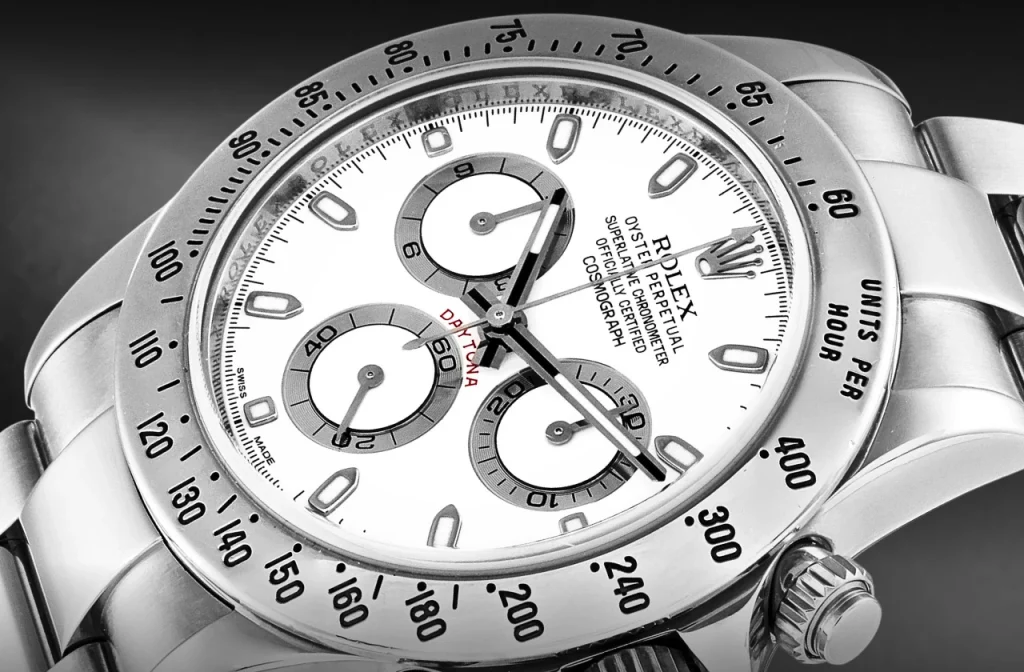
The Rolex Daytona is available in various luxurious materials, including Everose, yellow gold, white gold, and platinum. These materials contribute to its elegant and upscale appearance.
It also offers a range of dial color options such as blue, chocolate, and mother of pearl. Some models also feature unique elements like diamond indexes and leather straps, which add a touch of sophistication and exclusivity.
The GMT Master II is known for its versatile and practical design, which includes multiple bezel color options such as black/blue (‘Batman’), red/blue (‘Pepsi’), and black/brown (‘Rootbeer’). These bezels serve an aesthetic function and help users track multiple time zones.
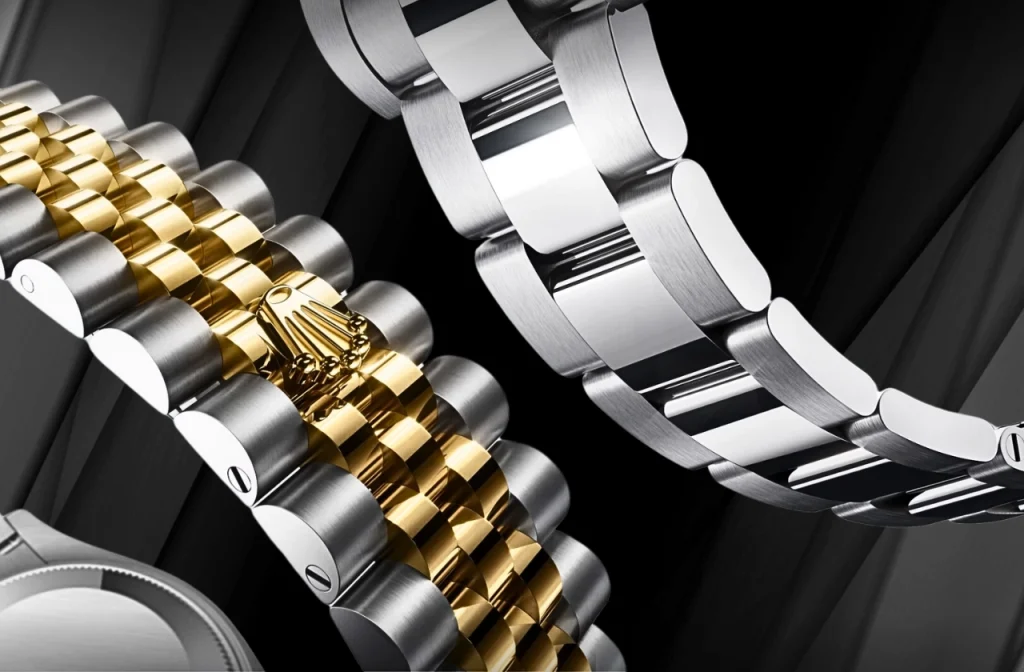
It’s available with Oyster and Jubilee bracelets, providing wearers with different looks and comfort levels. The three-link Oyster bracelet is for enthusiasts going for a sporty and casual yet elegant look. Its polished center links and brushed outer links bring out the elegance factor. Meanwhile, the five-link Jubilee bracelet is for more sophisticated collectors, oozing sexiness with its brushed and polished links.
The case size is typically 40mm, presenting a bold yet practical presence on the wrist. Its design is both functional and aesthetically pleasing.
The Rolex GMT Master II and Rolex Daytona offer unique functionalities tailored to different needs.
The GMT Master II features a bi-directional rotating 24-hour bezel, allowing users to track a second time zone. This is particularly useful for travelers and professionals who need to keep track of time in multiple locations. Additionally, it has an independently adjustable 24-hour hand, making it easier to manage multiple time zones without disturbing the local time setting.
On the other hand, the Daytona is designed with a focus on precision timekeeping and functionality for racing professionals. Its chronograph function includes a tachymeter scale, which enables the wearer to measure speed based on travel time over a fixed distance. Its stopwatch functionality is highly valued by those in motorsports, providing accurate measurements of elapsed time, which is crucial for competitive racing scenarios.
The Rolex Daytona houses the Caliber 4130. This in-house movement boasts a 72-hour power reserve and a 28,800vph frequency. Rolex updated it to the Caliber 4131 movement in 2023.
This new movement has several upgrades to enhance performance and reliability, such as the addition of Paraflex shock absorbers to protect the oscillator from impacts, a Chronergy Escapement to withstand high magnetic fields, and the Rolex Côtes de Genève decoration, which adds a polished groove between each band on the movement’s bridges. It’s visible through the transparent caseback on some models, such as the platinum Daytona.
Meanwhile, the Rolex GMT-Master II utilizes Caliber 3285. This movement provides a 70-hour power reserve and incorporates the Chronergy escapement, which improves efficiency and accuracy.
The Rolex Daytona and GMT-Master II may have different functions, but they share several features that make them equally effective:
The Rolex Daytona and the Rolex GMT-Master II are highly sought-after models, making them relatively difficult to find at retail prices. Due to their popularity, they often come with significant premiums on the secondary market.
The Daytona has a higher retail price, going for between S$8,000 and S$236,000. Its secondary market price is equally higher. Stainless steel Rolex Daytona watches typically sell for around S$43,605 to S$52,320 on the secondary market. Limited editions and models with unique features, such as platinum versions or those with factory-set diamonds, can command significantly higher prices, sometimes exceeding S$134,170.

On the other hand, the GMT-Master II retails for between S$15,000 and S$162,000. On the secondary market front, stainless steel models range from S$22,809 to S$26,834. Special editions or models with precious metals can see resale prices much higher, depending on the rarity and demand among collectors.
As for their investment potential, both luxury timepieces have proven good investments. The Daytona, in particular, has shown substantial appreciation over the years. High demand and limited supply ensure strong resale values for both models.
The Daytona’s resale value remains exceptionally high. It’s often considered one of the best Rolex models for investment purposes. While the GMT-Master II also offers robust resale potential, it generally sees a slightly lower appreciation than the Daytona but still commands a premium above retail.
As you consider their investment potential, please keep in mind the fluctuating nature of the luxury watch industry.
The hardest Rolex GMT to get is generally considered the GMT-Master II “Pepsi” model. This watch features a distinctive red and blue bezel and is highly coveted by collectors.
Demand exceeds supply, leading to long waiting lists at authorized dealers. The limited production further adds to its exclusivity. Pre-owned models often sell for significantly above retail prices, reflecting their desirability.
Many loyalists consider the GMT-Master II worth it due to its robust features and versatility. This model boasts a Cerachrom bezel and Triplock crown, making it durable and water-resistant.
Its jump-hour mechanism and perpetual, self-winding movement cater to frequent travelers, allowing them to easily keep track of multiple time zones.
The GMT-Master II is expensive primarily due to its high-quality craftsmanship. Its use of superior materials, such as the Cerachrom bezel and the paramagnetic blue Parachrom hairspring, contributes to its cost.
Additionally, limited production and high demand fuel higher prices. On the secondary market, prices can range from S$22,809 to S$26,834, with gold and two-tone models commanding even higher amounts due to their rarity.
The decision between the Rolex Daytona and the Rolex GMT-Master II ultimately depends on individual preferences and needs. If you’re drawn to the allure of motorsport heritage, the Daytona is your ideal companion. If you’re into global travel and functionality, the GMT-Master II will seamlessly integrate into your dynamic lifestyle.
Key Takeaways
Looking to buy or sell your luxury watches? Watchbook is your one-stop destination for trading Rolex, Patek Philippe, Tissot, Sinn, Zenith, and other luxury timepieces. Find your next watch today!