Scan the QR Code on Your Phone To Download the App



Scan the QR Code on Your Phone To Download the App
Scan the QR Code on Your Phone To Download the App


Ulysse Nardin and Rolex are two strong contenders in the luxury watch arena. Both brands showcase exceptional craftsmanship, precision, and prestige, but each has its unique appeal.
Ulysse Nardin watches, known for their innovative marine-inspired designs and cutting-edge technology, hold their value reasonably well, especially for limited editions and unique complications. However, they don’t match Rolex in terms of resale value and market demand.
This comparison will explore their differences in value, rank, and prestige, helping you decide which brand aligns with your personal style and investment goals.
| Brand | Collection | Model Name | Reference Number |
|---|---|---|---|
| Ulysse Nardin | Marine | Marine Torpilleur | 1183-310/40 |
| Ulysse Nardin | Dive | Diver | 1185-170-3/BLUE |
| Ulysse Nardin | Freak | Freak X | 2303-270/03 |
| Ulysse Nardin | Blast | Blast Skeleton X | 3715-260/CARB |
| Ulysse Nardin | Executive | Executive Dual Time | 243-20-3/42 |
| Rolex | Submariner | Submariner Date | 126610LN-0001 |
| Rolex | Daytona | Cosmograph Daytona | 116500LN-0001 |
| Rolex | Datejust | Datejust 41 | 126334-0022 |
| Rolex | GMT-Master II | GMT-Master II ‘Pepsi’ | 126710BLRO-0001 |
| Rolex | Day-Date | Day-Date 40 | 228238-0042 |
Ulysse Nardin and Rolex are respected luxury watch brands, each with its unique identity. Ulysse Nardin is known for avant-garde designs like the Freak X, while Rolex focuses on timeless, iconic models like the Submariner and Daytona. Rolex models typically have higher resale value and broader market demand.
Founding and Early Years
Ulysse Nardin was founded in 1846 by Swiss watchmaker Ulysse Nardin in Le Locle, Switzerland, a region known for its watchmaking excellence. It initially focused on crafting precision marine chronometers, which were essential navigation tools for naval forces and commercial shipping companies.
Thanks to the brand’s commitment to accuracy, its chronometers gained international recognition, winning several awards for precision and reliability. By the late 1800s, it had established itself as a premier supplier of marine timekeeping instruments for navies worldwide, solidifying its reputation for technical precision and maritime heritage.
Key Milestones and Innovations
Notable Models and Collections
Founding and Early Years
Rolex, on the other hand, was founded in 1905 by Hans Wilsdorf and Alfred Davis in London, England. Initially named “Wilsdorf & Davis,” the company focused on assembling and distributing high-quality, precise wristwatches—a novel idea at the time, as pocket watches were still the norm. Wilsdorf had a vision of creating wristwatches that were elegant and highly accurate.
Key Milestones and Innovations

Notable Models and Collections
Rolex’s notable models include:
Both brands have sustained their heritage through continuous innovation and commitment to quality. Their histories reflect a dedication to horological excellence, securing their places as esteemed names in the luxury watch industry.
Ulysse Nardin and Rolex both use quality materials for their timepieces:
Ulysse Nardin’s Use of Materials
It uses marine-grade 316L or 904L stainless steel (known for its superior corrosion resistance and hardness), titanium (used for its lightweight and hypoallergenic properties), high-tech ceramic (particularly in bezels and case components), ultra-light and shock-resistant carbon fiber/carbon composite, gold (rose, yellow, and white), platinum (in limited-edition or ultra-high-end Ulysse Nardin models), and scratch proof sapphire crystal (for its watch’s dials and in exhibition casebacks).
The cases’ surfaces have a smooth, even texture, demonstrating the level of expertise and attention the brand places on quality finishing.
Rolex’s Use of Materials
Rolex uses Oystersteel (904L stainless steel), Everose Gold (18k rose gold)- the brand’s proprietary rose gold alloy- yellow and white gold (18k), Rolesor (a combination of Oystersteel & gold), platinum (950 Platinum), Cerachrom (ceramic bezel inserts)- the brand’s proprietary ceramic material, elastomer (for its Oysterflex straps), gemstones, and scratch-resistant synthetic sapphire crystal.
Its watches’ cases are either brushed, polished, or both, depending on their category. Dress watches often have a polished finish, while sports watches often have a brushed finish.
Design Philosophy of Ulysse Nardin
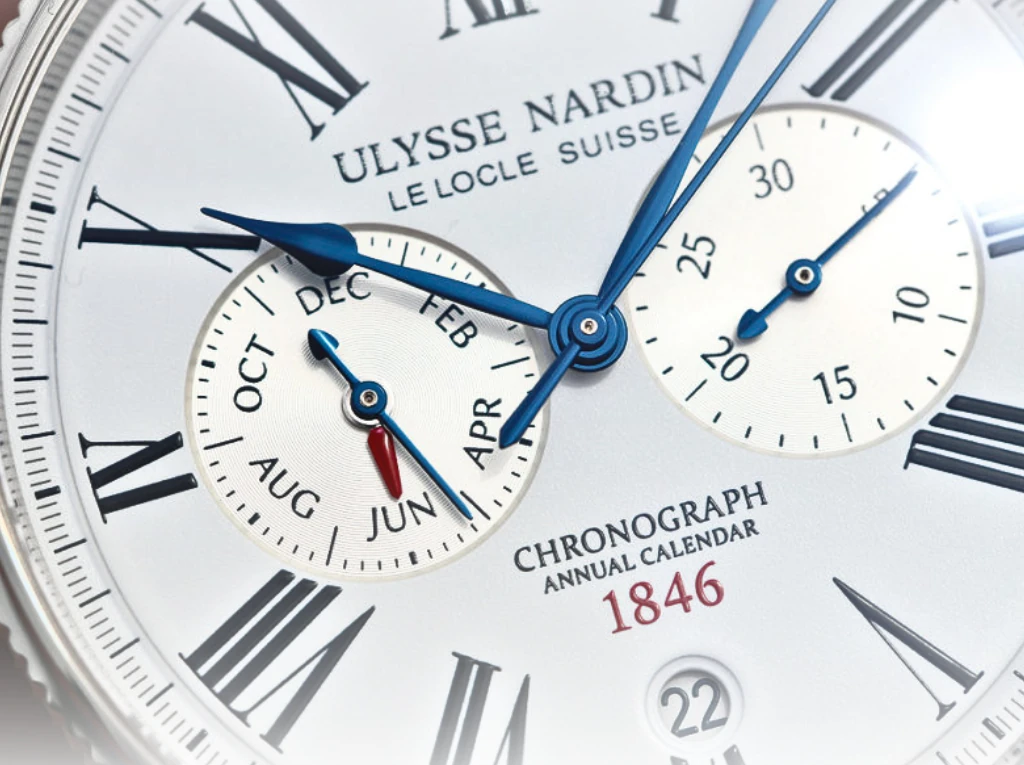
Ulysse Nardin is deeply rooted in maritime heritage, evident in its nautical-themed dials. The Marine Chronometer collection, for instance, features large Roman numerals and a clear, symmetrical layout reminiscent of traditional marine chronometers used by seafarers for navigation. Many of its dials feature shades of deep blue, oceanic turquoise, and other maritime-inspired hues.
The brand is also renowned for its unconventional displays. For example, the Freak collection is known for having no traditional hands or crown. Instead, the movement indicates the time, with a rotating bridge structure displaying the hours and minutes.
Design Philosophy of Rolex
Rolex dials exude precision with their clean and uncluttered appearance. They’re simple, clear, and instantly recognizable. The emphasis is on legibility, with large, clear, luminous hour markers often applied in precious metals and the iconic Mercedes-style hour hand and lollipop-style second hand for some models.
The Rolex brand employs a sunburst effect that creates a radiant pattern when light hits the dial, giving it a dynamic, changing appearance depending on lighting conditions.
It also uses unique materials like meteorite dials (Gibeon meteorite) in certain expensive watches (like the Daytona) and mother-of-pearl for a luxurious, iridescent look. Its dials can also be adorned with diamonds, rubies, and sapphires, especially on Day-Date and Datejust models.
Differences in Bracelet Design
Ulysse Nardin often incorporates rubber or leather straps in addition to stainless steel or titanium. Many of its models, especially in the Diver and Marine collections, have a more marine-inspired, sporty aesthetic. The bracelets may have a unique wave-like texture or embossed details, reflecting the brand’s maritime roots.
The brand typically employs a folding deployant clasp with a push-button release for its watches, often seen in the Ulysse Nardin Marine, Diver, and Freak collections.
Meanwhile, Rolex bracelet designs include the three-link Oyster, five-link Jubilee, three-piece President, five-piece Pearlmaster, Oysterflex, and leather (for 1908, Cellini, and some vintage models). Rolex leads the industry in clasp design with several patented systems:
Comfort and Durability
Ulysse Nardin bracelets are comfortable and often sportier and more rugged in design, especially with the use of rubber straps in several collections. The rubber material is lightweight and soft and contours well to the wrist, making it ideal for activewear and water sports. The stainless steel and titanium bracelets are also comfortable but may be bulky for some wrists, and their deployant clasp provides a simple yet secure fit.
Meanwhile, Rolex bracelets are renowned for their exceptional comfort due to the incorporation of features like the Easylink 5mm extension system and the Glidelock system. They make it easy to achieve a perfect fit throughout the day as wrist size changes with temperature or activity.
The bracelets, especially the Jubilee and Oyster, are designed with rounded, smooth links that prevent pinching or pulling of hair on the wrist. Their finishing is meticulous, offering a soft, smooth feel, and their clasps offer an equally secure and advanced fit.
Ulysse Nardin’s Movement Technology
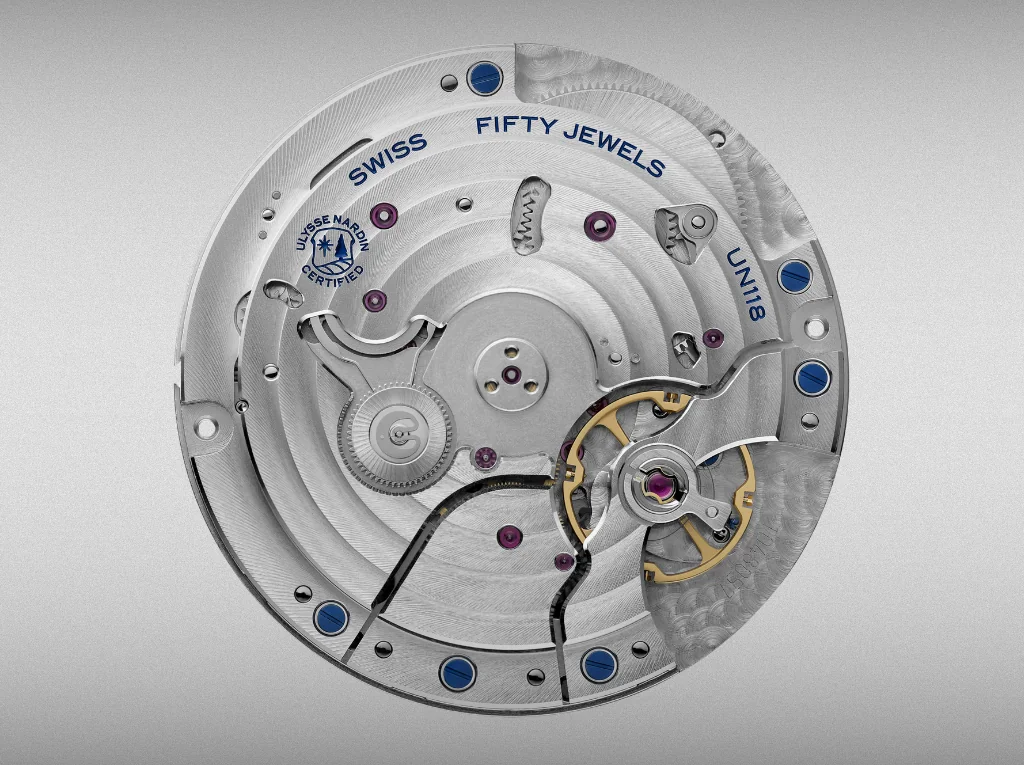
Ulysse Nardin is recognized for its innovative approach. It’s a pioneer in the use of materials like silicon in watchmaking. Its Freak series introduced groundbreaking technology with its unique escapement design and use of silicium for frictionless movement. The UN-118 movement is one of its notable developments, emphasizing longevity and precision.
Rolex’s Movement Technology

Rolex’s movement technology is renowned for precision, durability, and innovation. It features Perpetual self-winding movements with patented Parachrom hairsprings (anti-magnetic), Chronergy escapements (energy-efficient), and Paraflex shock absorbers for robustness. COSC-certified Rolex movements prioritize accuracy, power reserve, and longevity, exemplified by calibers like 3235 and 4130 used in flagship models.
Ulysse Nardin’s Technological Innovations
Aside from being the first watch brand to incorporate silicon (silicium) in a watch movement, it also boasts several innovations, such as a patented simplified dual-time system for its GMT watches. The pushers on their cases allow for one-click forward or backward adjustments of the local time without stopping the movement.
Rolex’s Technological Innovations
Rolex boasts numerous patents, including the Parachrom hairspring, which is resistant to magnetic fields and temperature variations, enhancing stability. It also boasts innovations like the Perpetual rotor and Oyster case.
According to Insights by GreyB, it has 2296 patents to its name worldwide, 1729 of which have been granted.
Comparative Analysis of Precision
Ulysse Nardin’s watch movements are renowned for their exceptional precision, achieved through innovations like silicon escapements, the Anchor Escapement (constant force delivery), and the use of flying tourbillons. These technologies reduce friction, resist magnetism, and ensure consistent energy release, resulting in highly accurate, COSC-certified chronometers that maintain stability over time.
Rolex is renowned for its meticulous approach to accuracy and reliability. Its in-house calibers undergo strict testing, achieving certification by the Contrôle Officiel Suisse des Chronomètres (COSC). Moving beyond this, the Rolex Superlative Chronometer designation ensures accuracy of -2/+2 seconds per day. This is achieved through additional proprietary testing, guaranteeing high precision and reliability.
Long-term Reliability
Ulysse Nardin watches are known for precision, craftsmanship, and innovative materials like silicium escapements. Their long-term reliability depends on regular maintenance, but their complex mechanisms may require more frequent servicing. While durable, their longevity is best preserved with care, especially for models featuring intricate complications and luxury finishes.
On the other hand, Rolex watches are synonymous with long-term reliability, thanks to robust Oystersteel cases, self-winding Perpetual movements, and Paraflex shock protection. They’re built for durability, precision, and low maintenance, often lasting generations. The brand’s reputation for reliability makes them a preferred choice for luxury collectors and adventurers.
Ulysse Nardin and Rolex are prestigious names in luxury watch durability and performance. Both are renowned for their robust construction and technical excellence.
Ulysse Nardin watches offer water resistance, typically ranging from 30m to 1,000m, depending on the model. Their marine-themed timepieces prioritize water protection, ideal for diving. Meanwhile, Rolex watches are renowned for exceptional water resistance, with models like the Submariner reaching depths of 300m and the Rolex Deepsea up to 3,900m.
Ulysse Nardin watches achieve shock resistance through robust case construction and specialized materials, ensuring durability against impact and vibration, though they may not match Rolex’s shockproof standards. Rolex watches emphasize robust shock resistance with their Paraflex shock absorbers, enhancing the durability even under harsh conditions. This innovation ensures the movement remains accurate and reliable.
According to WatchCharts, Ulysse Nardin watches cost around S$8,000 on average, though prices range from around S$2,000 to S$48,000 depending on the model. Its most popular collection, the Marine, costs an average of S$7,000.
The site also records that the watches generally experience a depreciation of approximately 45% from their original retail prices when resold on the secondary market. For instance, models like the Freak X, which retail around $27,500, often resell for approximately $18,600, reflecting a depreciation of about 32%.
This depreciation rate is relatively higher compared to some other luxury watch brands like Audemars Piguet and Vacheron Constantin, indicating a moderate resale value retention for Ulysse Nardin timepieces.
On the other hand, Watchcharts reveals that Rolex watches cost around S$17,000 on average, though prices range from around S$3,000 for the cheapest Rolex to S$301,000 for the more expensive watches, depending on the model. Its most popular collection, the Datejust, costs an average of S$13,000.
As for resale value, Rolex watches are renowned for their strong resale value, often appreciating over time. On average, pre-owned Rolex timepieces trade at approximately 18.8% above their original retail prices. For instance, the Rolex Oyster Perpetual, with an average retail price of around $7,000, can command higher prices in the secondary market, depending on factors like model, condition, and demand.
However, market dynamics can influence these values. Recent trends indicate a slight decline in resale prices, with a 4.8% drop over the past year. Despite this fluctuation, many Rolex models continue to sell above their original retail prices, underscoring the brand’s enduring value retention.
Here are some of the main ones:
1. Budget: Rolex watches are generally more expensive than Ulysse Nardin, with higher entry-level prices and greater price appreciation over time. Ulysse Nardin may offer more features and complications for a lower price point.
2. Lifestyle: Rolex is versatile and can be worn for both formal events and casual outings, thanks to its classic, understated designs. Ulysse Nardin, with its bold, nautical-inspired aesthetic, is better suited for statement-making occasions or as a unique addition to a luxury watch collection.
3. Investment Potential: Rolex watches often appreciate in value due to high demand and limited availability. Ulysse Nardin, while luxurious, may have a smaller resale market and lower appreciation potential.
4. Servicing & Maintenance: Ulysse Nardin watches often require more servicing and maintenance due to their intricate movements and specialized complications. Rolex watches, known for their durability and robust in-house movements, generally need less frequent maintenance. Rolex also benefits from a larger global service network, making servicing quicker and more accessible.
5. Comfort: Rolex watches have a refined, slim design and are known for their lightweight, ergonomic fit, making them ideal for everyday wear. Ulysse Nardin watches, often larger and more avant-garde, have greater “wrist presence,” meaning they stand out more but may feel bulkier for those unaccustomed to larger timepieces.
Here’s a look at the top five fine watches from each brand:
|
Model |
Key Features |
Retail Price |
Private Market Price |
Pre-Owned Price |
|---|---|---|---|---|
|
Ulysse Nardin Marine Torpilleur ref. 1183-310/40 |
|
S$13,200 |
S$5,587 |
S$7,012 |
|
Ulysse Nardin Diver ref. 1185-170-3/BLUE |
|
S$21,051 |
S$14,446 |
S$15,627 |
|
Ulysse Nardin Freak X ref. 2303-270/03 |
|
S$37,500 |
S$23,925 |
S$25,150 |
|
Ulysse Nardin Blast Skeleton X ref. 3715-260/CARB |
|
S$37,100 |
S$21,201 |
S$22,278 |
|
Ulysse Nardin Executive Dual Time ref. 243-20-3/42 |
|
S$13,900 |
S$6,673 |
S$8,285 |
|
Rolex Submariner Date ref. 126610LN-0001 |
|
S$15,050 |
S$17,165 |
S$18,534 |
|
Rolex Cosmograph Daytona ref. 116500LN-0001 |
|
S$20,650 |
S$34,349 |
S$36,322 |
|
Rolex Datejust 41 ref. 126334-0022 |
|
S$21,101 |
S$22,150 |
S$23,000 |
|
Rolex GMT-Master II ref. 126710BLRO-0001 ‘Pepsi’ |
|
S$15,700 |
S$26,039 |
S$27,847 |
|
Rolex Day-Date 40 ref. 228238-0042 |
|
S$54,596 |
S$44,600 |
S$47,310 |
Ulysse Nardin and Rolex cater to distinct watch enthusiasts. Ulysse Nardin offers avant-garde design and technical innovation, while Rolex symbolizes timeless prestige and robust reliability. Choosing between them depends on personal style, with Ulysse Nardin appealing to those seeking bold craftsmanship and uniqueness and Rolex representing classic luxury.
Key Takeaways
Looking to buy or sell your luxury watches? Watchbook is your one-stop destination for trading Rolex, Patek Philippe, Tissot, Sinn, Zenith, and other luxury timepieces. Find your next watch today or list your item for free!