

Scan the QR Code on Your Phone To Download the App



Scan the QR Code on Your Phone To Download the App
Scan the QR Code on Your Phone To Download the App


Watch enthusiasts often wonder if JLC is better than Rolex. The answer pretty much depends on your preference.
JLC isn’t necessarily better but appeals to those who value understated elegance and mechanical artistry. It’s often favored by connoisseurs and collectors rather than status seekers.
As for the best watch brand, there’s no single answer, but brands like Patek Philippe and Audemars Piguet are frequently mentioned alongside Rolex and JLC for their legacy, exclusivity, and influence in high horology.
Keep reading this Rolex vs Jaeger-LeCoultre review to learn more about two of the best watch brands.

Rolex was born from Hans Wilsdorf’s vision to create accurate wristwatches at a time when pocket watches dominated. Rolex emphasized chronometric precision from the start, becoming the first wristwatch brand to receive a Swiss Certificate of Chronometric Precision in 1910.
One of Rolex’s defining achievements was the creation of the Oyster case in 1926 — the world’s first waterproof wristwatch. This was a groundbreaking moment, proving that wristwatches could be elegant and durable.
The brand continued to build its image around toughness and innovation, with feats like the Rolex Deep Sea Special accompanying a submersible to the bottom of the Mariana Trench in 1960.
Key Icons:

JLC began as a small workshop in the Vallée de Joux, quickly gaining a reputation for inventiveness. Antoine LeCoultre’s invention of the Millionomètre in 1844 — the first instrument capable of measuring the micron — symbolized the Maison’s technical brilliance early on.
It’s often referred to as “the watchmaker’s watchmaker” due to its long-standing tradition of supplying movements and components to prestigious brands like Patek Philippe, Audemars Piguet, Vacheron Constantin, and even Rolex.
One of its most legendary creations is the Reverso, introduced in 1931. Designed for polo players, its flip-case mechanism protected the dial during matches and has since become a design classic.
Notable Innovations:
Key Icons:
Rolex – The Power of Legacy
Rolex’s legacy is built on uncompromising durability, precision, and iconic design. It hasn’t focused on reinventing the wheel — rather, it perfected it. Rolex’s achievements lie in refining timekeeping for real-world utility and making it aspirational.
Rolex doesn’t chase mechanical novelty — instead, it emphasizes reliability, evolution over revolution, and brand mythology.
JLC – The Engine of Innovation
Jaeger-LeCoultre has always stood at the cutting edge of watchmaking innovation — not just for itself but for the entire Swiss watchmaking industry.
JLC isn’t afraid to experiment, and its legacy is one of technical brilliance and innovation rather than mass-market recognition.
Rolex – A Cultural Icon
Few watch brands are as entrenched in popular consciousness as Rolex. It’s a global symbol of success — seen on the wrists of actors, athletes, politicians, and fictional heroes.
Rolex has mastered the art of branding and storytelling, making its watches desirable to people who may not even know the difference between an automatic and a quartz movement.
JLC – The Connoisseur’s Choice
Jaeger-LeCoultre appeals to purists, collectors, and enthusiasts. Its reputation as “the watchmaker’s watchmaker” reflects deep respect from within the industry.
JLC represents subtle sophistication — a brand that speaks in hushed tones rather than flashy displays.

Rolex is synonymous with practical luxury. Its exceptional craftsmanship emphasizes functionality, durability, and precision over ornamental finesse. Every Rolex movement is developed and manufactured entirely in-house. These calibers are known for being extremely robust and built to withstand wear in diverse environments — from diving to aviation.
Rolex movements are all COSC-certified chronometers, which means they meet high Swiss standards for exceptional precision. Many are further enhanced by Rolex’s Superlative Chronometer certification, offering a ±2 seconds/day accuracy.
With features like the Parachrom hairspring (resistant to temperature and magnetic fields) and Cerachrom bezels, Rolex movements are designed to be virtually indestructible under normal use. These are watches you can wear daily without worry.
Watches like the Submariner, GMT-Master II, and Explorer showcase Rolex’s tool-watch DNA. Function always precedes ornament, resulting in a clean, legible, and utilitarian design ethos.
JLC is known for pushing the envelope in movement complexity and artistic craftsmanship. It has created over 1,200 in-house movements, a number few other brands in the watch industry can match. This includes calibers for other luxury brands like Audemars Piguet and Patek Philippe in the past.
It emphasizes refined decoration and finishing techniques, such as anglage (beveling), perlage (circular graining), and Côtes de Genève. Its watches’ open casebacks often display beautifully hand-finished movements.
Jaeger-LeCoultre’s commitment to excellence is evident in its highly complicated pieces, including tourbillons, perpetual calendars, minute repeaters, and the ultra-thin Master Ultra Thin collections. The Reverso Tribute Gyrotourbillon and Hybris Mechanica line are prime examples of its horological prowess.
While it has rugged models (e.g., the Polaris), it is best known for refined elegance and mechanical artistry. JLC watches are often admired not only for how they perform but for how they were made.
| Feature | Rolex | Jaeger-LeCoultre |
|---|---|---|
| Craftsmanship Focus | Ruggedness, utility, reliability | Elegance, complexity, artisanal finishing |
| Movement Development | In-house, highly robust | Over 1,200 in-house calibers, highly diverse |
| Certification | COSC + Superlative Chronometer | Doesn’t rely on COSC-certification as it believes its tests are stricter |
| Mechanical Complexity | Relatively simple, focused on functionality | Known for complications like tourbillons, minute repeaters |
| Design Philosophy | Tool-watch functionality | Haute horlogerie refinement |
| Wearability | Ideal for daily use and active lifestyles | Often more delicate, collector-focused |
| Symbolism | Prestige through performance | Prestige through craftsmanship |
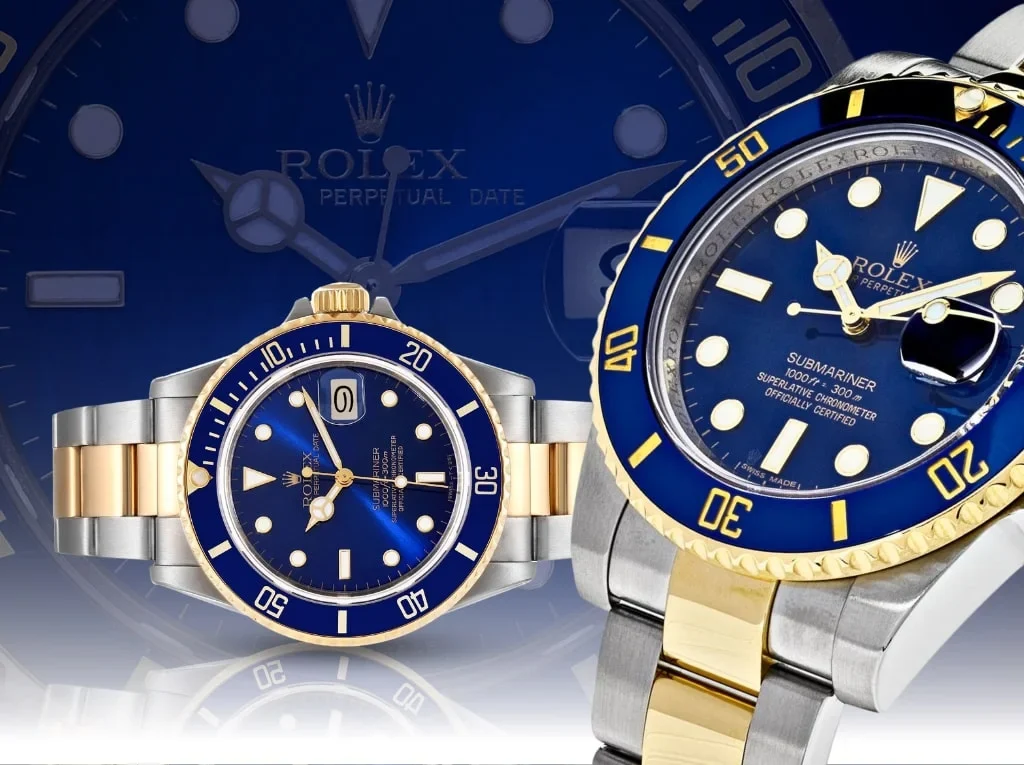
Rolex watches are built around enduring design principles that rarely change — not because the brand lacks innovation but because its core formulas are already refined. The silhouette of a Submariner, the fluted bezel of a Datejust, or the contrasting panda dial of a Daytona are instantly recognizable. The brand has found a visual language that works and sticks to it. Designs evolve incrementally to retain legacy while improving function (e.g., slimmer lugs, ceramic bezels, better lume).
Even its dressier iconic watches, like the Day-Date or Datejust, retain a sense of robustness. Sport and utility are always at the forefront: Mercedes hands and luminous markers dominate most models. Bezels are knurled or ceramic, cases are Oyster-sealed for water resistance, and bracelets are engineered for comfort and durability.
Wearing a Rolex signals a sense of accomplishment — not just wealth, but discernment. This appeal isn’t accidental: Precious metals such as Rolesor, Everose gold, and platinum and polished surfaces amplify luxury appeal. The brand’s restraint in novelty means Rolex watches rarely go out of fashion.
As for color, Rolex uses it sparingly and strategically: Sunburst blues, rich greens (often symbolic of prosperity), and stark black-and-white contrasts all help models feel familiar yet fresh. More recent releases, like the colorful Rolex Oyster Perpetuals, add youthful playfulness without losing heritage.
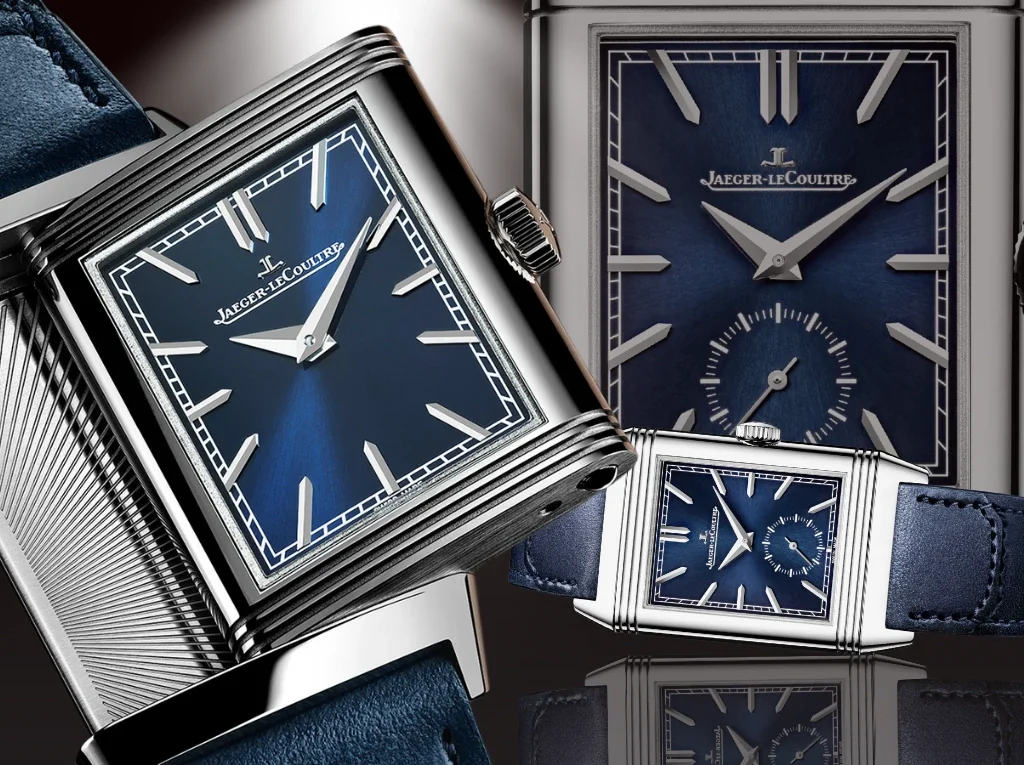
JLC leans into classical elegance, often producing excellent watches with thin cases, clean dials, and refined complications. It’s a watchmaker’s brand — less flashy than Rolex but beloved for its horological substance. It’s Ideal for formal settings, business attire, or anyone who values discretion over display.
A hallmark of JLC is its design thoughtfulness. The Reverso, for instance, is not only a watch but a piece of design history: Art Deco roots show in the sharp lines, symmetry, and case proportions. The ability to flip the Reverso case reveals a second dial or a blank canvas — merging form and function with timeless elegance.
While the brand is steeped in tradition, it’s not afraid to push boundaries: Skeletonized models, tourbillons, and intricate dial layouts (e.g., Duomètre or Master Grande Tradition) showcase JLC’s watchmaking prowess. The Polaris line blends vintage inspiration with sporty features — offering versatility outside the dressy realm.
Unlike Rolex, JLC caters to a broader range of tastes: Minimalist lines for purists, playful complications for connoisseurs, and luxurious finishes like guilloché dials, enamel work, and hand-applied indices enrich their more artistic pieces.
The comparison table provides three watches from the brands’ top collections plus their key features and retail, private market, and pre-owned prices:
|
Model |
Key Features |
Retail Price |
Private Market Price |
Pre-Owned Price |
|---|---|---|---|---|
|
S$15,250 |
S$17,032 |
S$19,150 |
|
|
S$22,700 |
S$40,751 |
S$45,180 |
|
|
S$19,163 |
S$20,500 |
S$21,000 |
|
|
Jaeger-LeCoultre Reverso Classic Medium Duoface ref. Q2458422 |
|
S$16,600 |
S$11,935 |
S$12,500 |
|
Jaeger-LeCoultre Master Control Chronograph Calendar ref. Q413813J |
|
S$25,069 |
S$19,500 |
S$20,110 |
|
S$14,569 |
S$11,450 |
S$13,130 |
Rolex stands at the pinnacle of mainstream luxury, often perceived not just as a watch but as a cultural icon. Its branding is powerful and universally understood—it’s shorthand for success, affluence, and accomplishment. Whether it’s a reward for a milestone or a visible statement of status, Rolex has carved out a space where luxury intersects with achievement.
From a market standpoint, it holds immense brand equity. Its watches are coveted for their aesthetic and mechanical quality and their investment value. With high resale prices and consistent demand, a Rolex is often seen as a “safe” luxury purchase. This strength translates into broad appeal across different demographics, from first-time luxury buyers to seasoned collectors.
In contrast, Jaeger-LeCoultre exudes a more understated form of elegance. It’s revered for its craftsmanship, innovation, and deep-rooted contribution to the art of watchmaking. However, it doesn’t command the same instant name recognition as Rolex outside of collector and enthusiast circles.
This lack of mainstream visibility isn’t a flaw—rather, it’s part of the brand’s appeal to those who value discretion and authenticity over overt branding. Owning a JLC, particularly one of its more iconic models like the Reverso or Master Control, is often a subtle nod to one’s deep appreciation of haute horology.
The contrast between them can be summarized as:
Rolex watches typically start at a significantly higher price point than many other luxury brands. According to WatchCharts, Rolex watches cost around S$16,000 on average, though prices range from around S$2,000 to S$286,000, depending on the model. This reflects not only the quality of the timepieces but also the brand’s prestige, heritage, and marketing prowess.
Its deliberate production constraints, combined with global demand, create a sense of scarcity. Popular models, especially stainless steel sports models like the Submariner or Daytona, often have long waitlists at authorized dealers. This artificial scarcity fuels demand and drives up prices on the secondary market.
Many Rolex models not only retain their value but often appreciate over time—particularly limited editions, discontinued references, and those with strong collector interest. As a result, Rolex is frequently viewed as one of the few “investment-grade” watch brands.
For the level of horological craftsmanship offered, JLC’s retail prices are considered competitive—often offering more complexity per dollar than its peers like TAG Heuer. WatchCharts reveals Jaeger-LeCoultre watches cost around S$11,000 on average, though prices range from around S$4,000 to S$44,000, depending on the model.
While it produces high-end watches with significant technical merit, its resale market is softer. This is due in part to less mainstream brand recognition compared to Rolex and fewer “hype” models driving secondary market buzz.
Jaeger-LeCoultre timepieces can be found at steep discounts on the pre-owned market, which is excellent for buyers seeking luxury and technical sophistication at a bargain. However, for original owners, this often means lower resale value compared to what they paid at retail.
Rolex tends to outperform JLC when it comes to pure financial return. Its watches—especially popular or discontinued models—can serve as appreciating assets, making them attractive to both collectors and investors.
Meanwhile, JLC arguably delivers more horological value for the money, especially in terms of technical achievement and movement complexity. It offers substance and heritage for purists and enthusiasts, even if it doesn’t translate into resale gains.
Rolex and Jaeger-LeCoultre represent two pillars of luxury watchmaking—Rolex excels in precision and prestige, while Jaeger-LeCoultre embodies craftsmanship and innovation. Choosing between them depends on personal style and values. Whether seeking iconic status or horological artistry, both brands offer timeless appeal and exceptional quality for discerning watch enthusiasts.
Key Takeaways:
Looking to buy or sell your luxury watches? Watchbook Singapore is your one-stop destination for trading Rolex, Patek Philippe, Tissot, Sinn, Zenith, and other luxury timepieces. Find your next watch today!


